
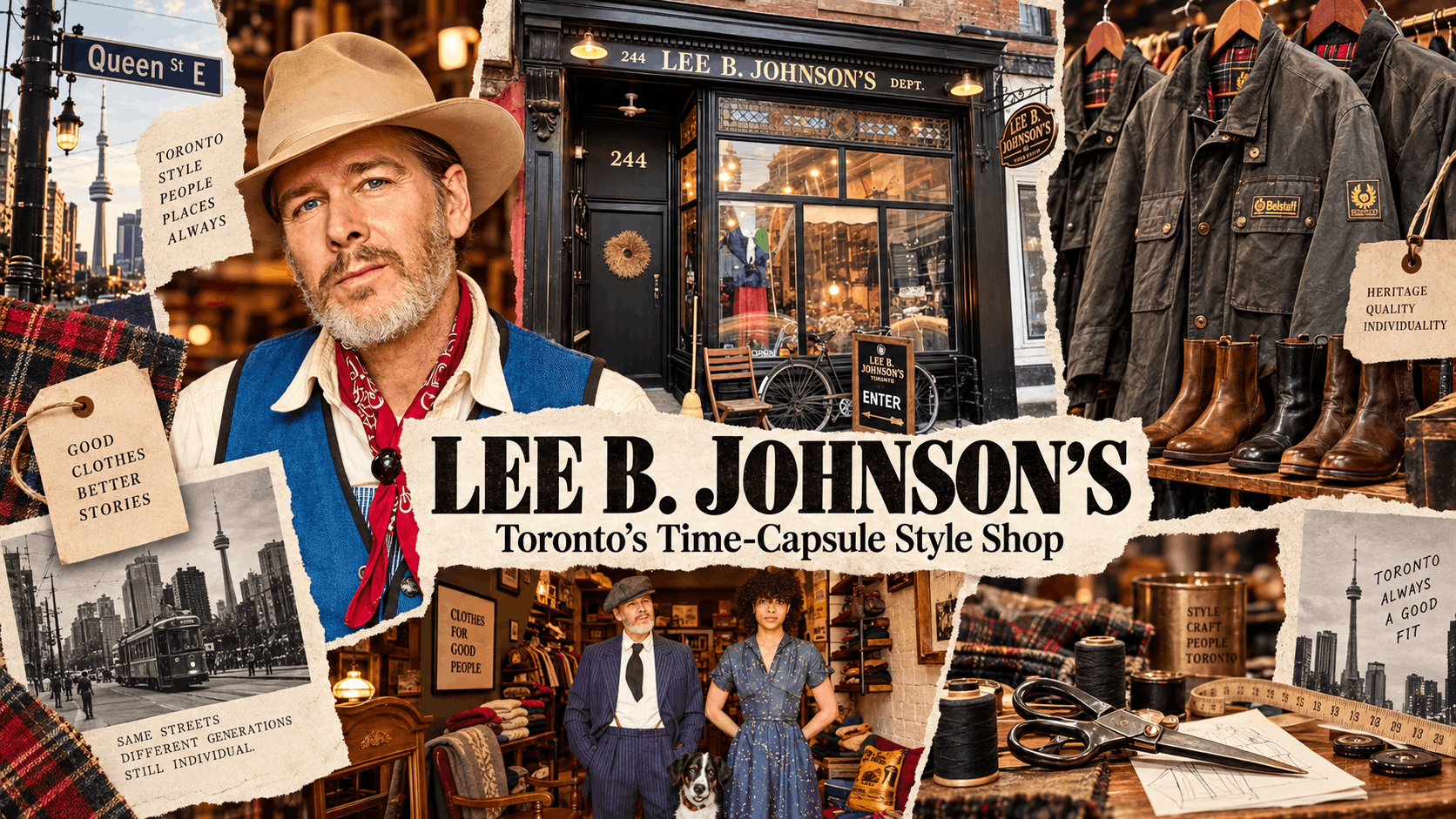


Lee B. Johnson’s mixes untouched deadstock, new fashion, tailoring and decades of cultural history on Queen Street East.
There are vintage stores, and then there are stores that make you rethink what “vintage” is supposed to mean.
Lee B. Johnson’s Dept. Store in Toronto falls firmly into the second category.
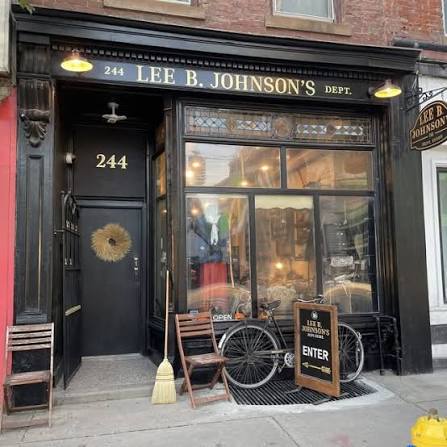
Located at 244 Queen Street East, the shop mixes carefully selected new clothing with extraordinary deadstock from the 1930s, ’40s and ’50s—pieces that survived their original era unsold and, in many cases, unworn. Instead of displaying them like museum pieces, Lee B. Johnson’s presents them as fashion meant to be worn now.
That distinction is what makes the store special.
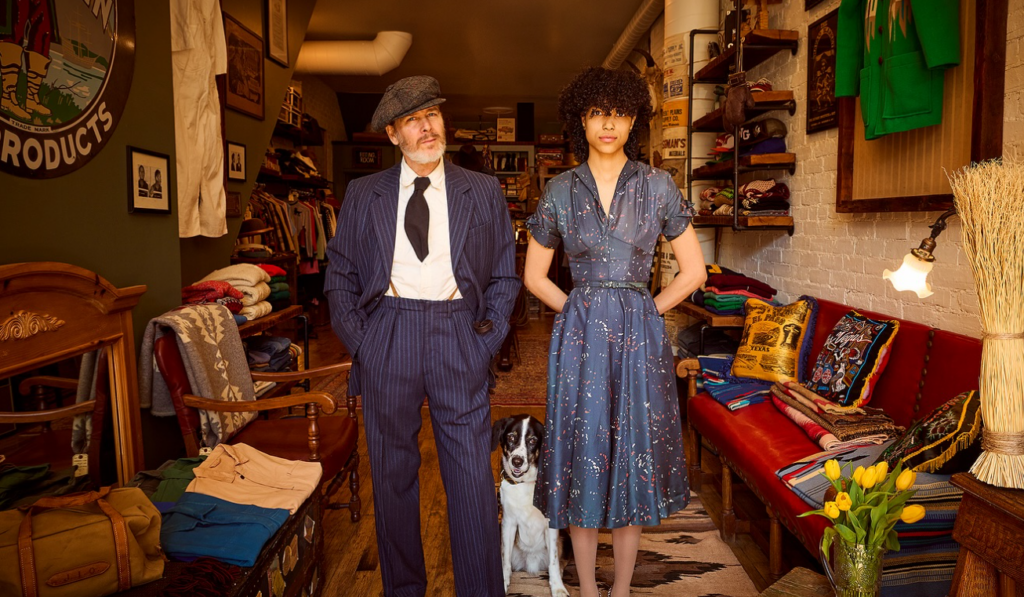
A 1940s shirt can sit beside a contemporary jacket. Old workwear can become part of a modern silhouette. A pair of trousers that almost works can be adjusted by the store’s seamstress and tailor, turning what could have been a collectible into something genuinely personal.
The result is less “vintage shop” and more living fashion archive.
People Don’t Travel Here Just to Buy Old Clothes
Shoppers have come from New York, Montreal, Detroit and beyond to explore the collection, and that makes sense when you realize Lee B. Johnson’s is selling something harder to find than clothing:
an eye.
The store’s strength is its curation. There is no attempt to fill racks simply because something is old. Pieces are selected because of proportion, construction, fabric, cultural relevance or simply because they are unusual enough to deserve another life.
That philosophy becomes clearer when you look at owner Patrick King’s history.
Long before opening Lee B. Johnson’s, King was behind the streetwear label Poets & Thieves, which appeared in publications including Vapors, URB, Streetwear Today, Mass Appeal, BPM and Toro.
His work blended fashion with music, art, literature and street culture, referencing figures such as Jack Kerouac, Basquiat and other cultural outsiders rather than simply following whatever was fashionable at the moment.
The brand also developed serious cultural credibility. The media kit shows Poets & Thieves designs worn by Mos Def, Talib Kweli, Samuel L. Jackson, Lupe Fiasco, Don Letts, Redman and Dante Ross, among others.
That background helps explain why Lee B. Johnson’s feels more like a point of view than a retail concept.
Queen Street East Is Part of the Experience
The location matters too.
This stretch of Queen Street East is filled with layers of Toronto history—old commercial buildings, independent shops, community spaces and storefronts that have survived multiple versions of the city.
The building at 244 Queen East dates to the early 20th century and is included on Toronto’s Heritage Register. Nearby sits the famous storefront used for Kim’s Convenience, along with independent design, bicycle, beauty and community-focused businesses.
That mixture gives the block something many shopping districts have lost: personality.
It also makes Lee B. Johnson’s feel strangely inevitable here.
A store built around preserving old garments, adapting them for new people and refusing to separate history from style belongs on a street that has been doing much the same thing for more than a century.
The Past, Without the Costume
Perhaps the smartest thing about Lee B. Johnson’s is that it never seems overly interested in nostalgia.
The goal isn’t to dress someone exactly as they would have dressed in 1947.
It is to take something beautifully made in 1947 and figure out how it belongs in 2026.
Alter it.
Pair it with something new.
Change the proportions.
Wear it completely wrong according to the original rules.
That is where the shop becomes interesting.
Fashion talks endlessly about sustainability, craftsmanship and authenticity. Lee B. Johnson’s quietly puts all three on the same rack.
And Patrick King’s journey—from music and street culture to Poets & Thieves and now to a shop filled with decades of clothing history—makes the whole thing feel less like a new venture than the continuation of an idea he has been working on for years.
Lee B. Johnson’s isn’t preserving the past behind glass.
It’s letting the past get dressed and go back outside.
















+ There are no comments
Add yours