
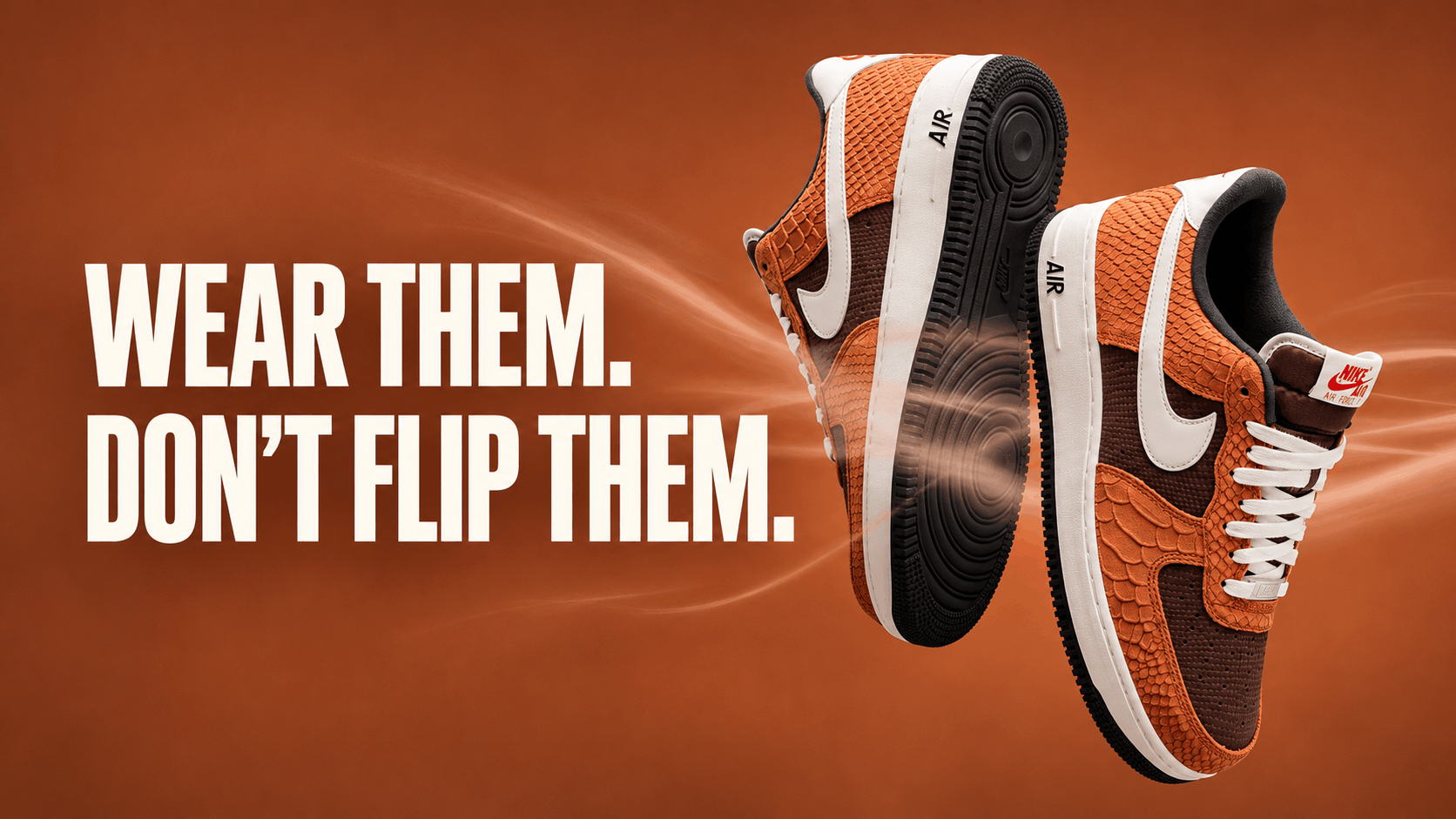
The Hype Market is Bleeding Out—And the “Dad Shoes” Are Dancing on Its Grave
There was a time, not too long ago, when the most valuable asset in a man’s closet was shrink-wrapped in plastic and sitting on a glowing acrylic shelf. The sneaker world had become Wall Street for teenagers and hypebeasts, where buying sneakers and actually putting them on your feet was considered financial sabotage.
But the bubble hasn’t just burst; it has completely cratered.
The absurd era of paying triple the retail price for a basic silhouette is dead. Today, less than 50% of new sneaker releases even turn a profit on the resale market, down from nearly 60% just a few years ago. The premium Nike and Jordan releases that used to print money for resellers have seen their secondary market share drop by double digits. Men who appreciate true style stopped caring about engineered scarcity and started looking for actual substance.
The Unapologetic Rise of the Anti-Hype Sneaker
And here is the most beautifully ironic part of this market correction: the brands destroying the hype machine are the ones we used to call “old man shoes.”
While the “sneaker hustle” deflates, performance running brands are experiencing violent, unapologetic growth. Asics resale volume is up a staggering 45% year-over-year. HOKA just crossed $2.58 billion in net sales, with its core domestic audience practically saturating the market. The shoes that were once mocked as chunky, orthopedic nursing-home specials are now the ultimate everyday flex
Creases are the New Currency. The Return to Street-Level Style
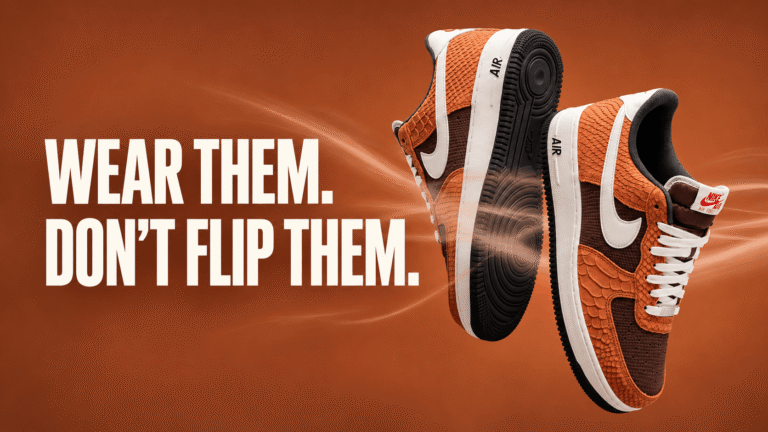
For years, the cardinal sin of sneaker culture was a creased toe box. Men were walking like penguins to avoid bending the leather on their Retro 1s. Today, a pristine, unworn shoe just looks like you’re trying too hard. It screams insecurity. If you’re worried about someone stepping on your toe box, you aren’t owning the room; the shoes are owning you.
The cultural pendulum has swung back to authenticity. A worn pair of suede low tops or a slightly beat up retro basketball shoe tells a story. It shows you have places to be, tables to book, and a life that doesn’t revolve around a microfiber sneaker cleaning kit. It’s the Jane Birkin approach to luxury: beat it up to prove it’s yours.
The enthusiast community is leading this charge, with a dominant, unapologetic rallying cry echoing across forums like r/Sneakers: “Wearing sneakers in public is how we keep the culture thriving… Shoes are for wear and tear, not for the shelf.” The new status symbol isn’t the tag on the laces—it’s the dirt on the heel.
Flat, Suede, and Grown-Up: What Actually Matters Now
With the hype-drops out of the way, the aesthetic of the modern sneaker is growing up. We are stepping away from the massive, cartoonish, chunky silhouettes of the last five years. The orthopedic spaceships have landed, and we are shifting aggressively into low-profile, mature designs.
Earth tones—chocolate browns, rich burgundies, and deep olive greens—are replacing high-contrast neon color-blocking. It’s a sophisticated palette that pairs just as easily with a tailored trouser as it does with heavy denim. Suede and mixed-material uppers are dominating because they age beautifully, taking on a patina that synthetic mesh simply can’t replicate.
Simultaneously, the challenger brands have hijacked the throne. Brands like HOKA and ASICS are pulling focus with performance-first designs, proving that pure comfort and running-tech pedigrees are the ultimate everyday flex. Meanwhile, low-cut, vintage-inspired models—think classic indoor soccer silhouettes and 80s skate profiles—are taking over the pavement. It’s a renaissance of wearability, proving that the best sneaker in the world is the one you don’t have to think twice about lacing up.




+ There are no comments
Add yours